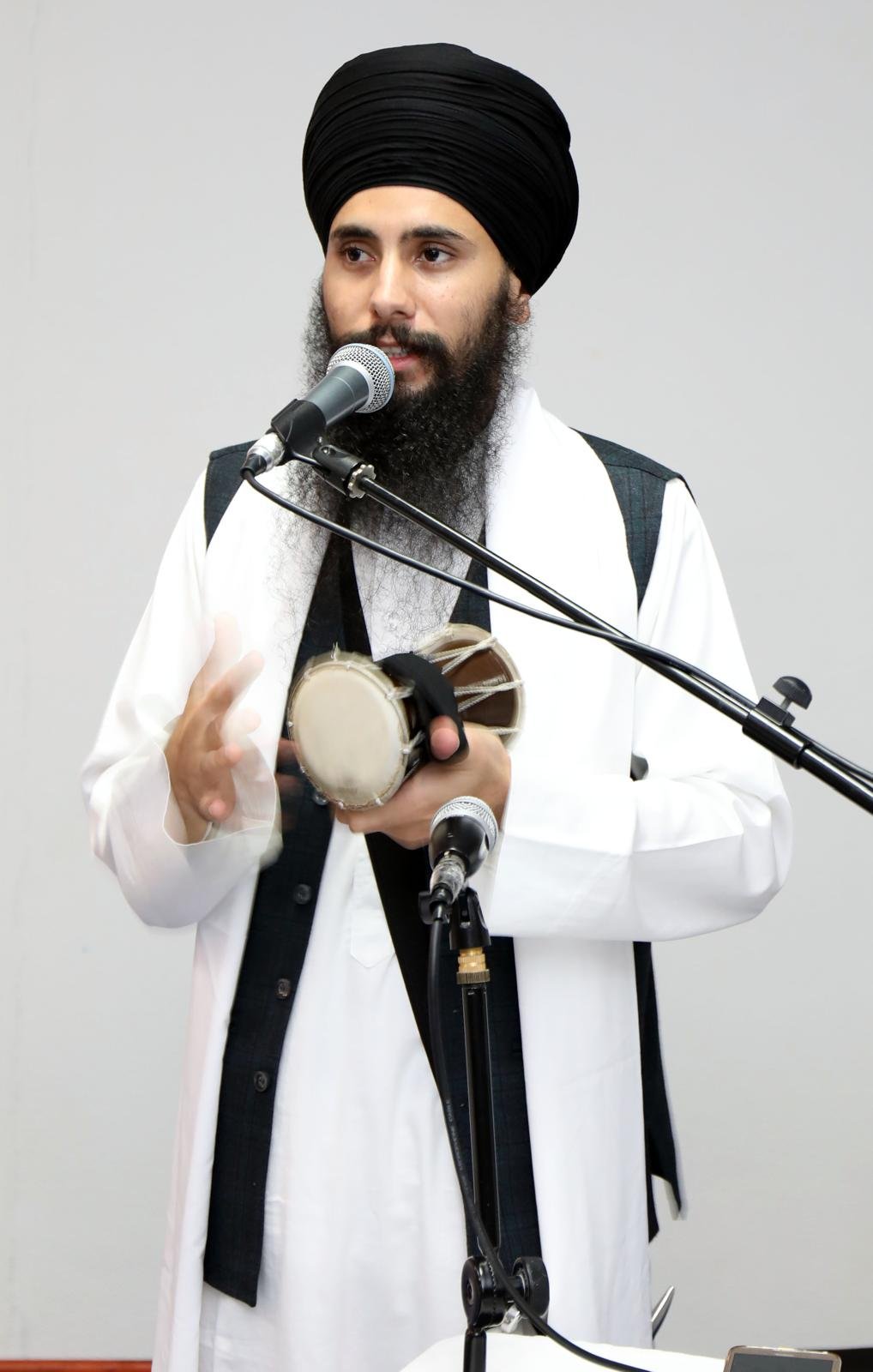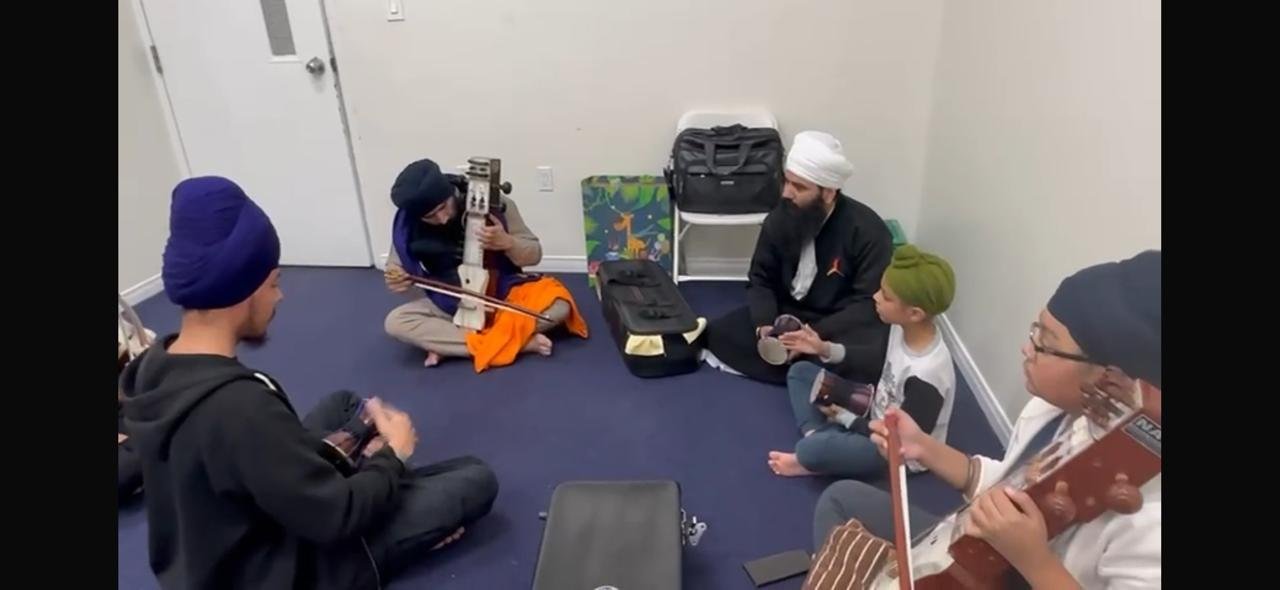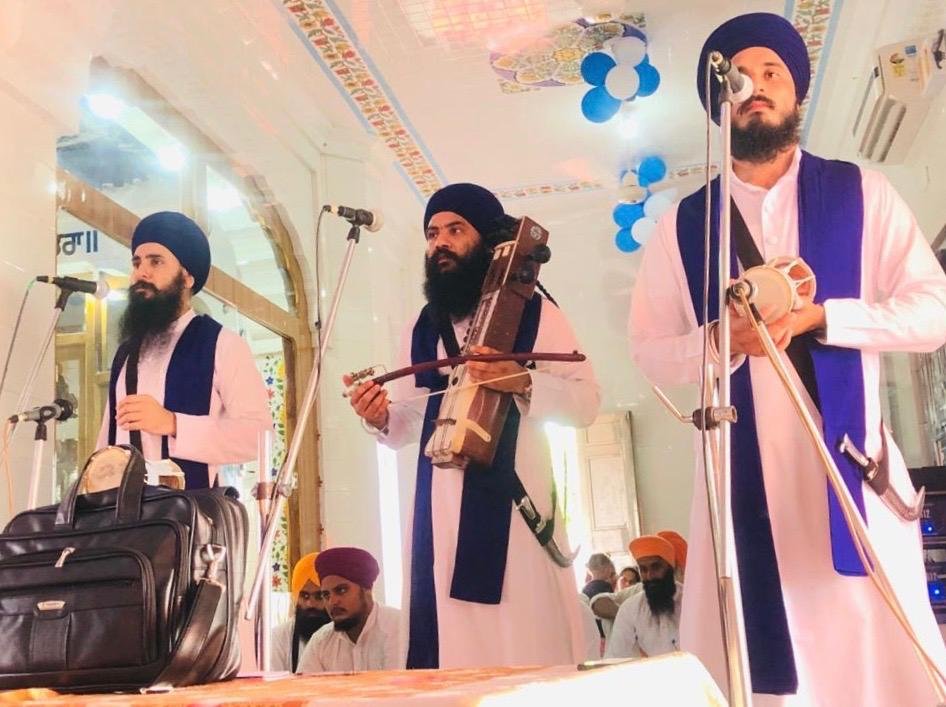
A Dhadi Jatha is a group of Sikh musicians who narrate history through song. The tradition takes its name from the Dhad — a small hourglass-shaped drum held in one hand and played with the fingers of the other. Alongside it stands the Sarangi, a bowed string instrument whose voice is said to come closest to the human voice.
The tradition was established by Sri Guru Hargobind Sahib Ji, who instructed Dhadis to sing Vaaran — ballads of courage — in the presence of the Sangat, so that the community would remember the sacrifices made for faith and for justice.
A Dhadi Jatha typically consists of three members: a lead singer, a Sarangi player, and a Dhad player, with each member also singing. Between the musical passages, the Jatha delivers explanatory discourse, placing each event in its historical and Gurmat context.
What sets Dhadi Vaaran apart from other forms is its purpose. It is not performance for its own sake. The Vaar recounts the lives of the Gurus, the sacrifices of the Shaheeds, the courage of warriors, and the principles that guided them — so that the listener leaves not only moved, but instructed.